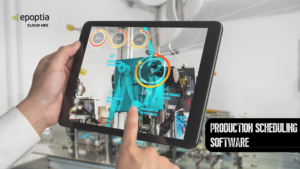



Discover why even good production plans fail on the shop floor and how real-time MES planning closes the gap between assumptions and execution
At first glance, most production plans look solid. Orders are scheduled, machines are allocated, lead times are calculated, and delivery dates are confirmed. On paper, everything makes sense.
And yet, on the shop floor, reality unfolds very differently.
Delays appear within hours. Priorities change mid-shift. Machines stop unexpectedly. Operators wait for instructions. Suddenly, the original plan is no longer relevant, and production teams are forced into daily firefighting.
To begin with, this isn’t because planners are careless or teams lack experience. On the contrary, most manufacturing planning problems come from small assumptions that break the moment production starts.
In job shops and high-mix environments especially, production planning goes wrong faster than most manufacturers expect. The real issue isn’t planning itself; it’s the lack of real-time feedback from execution.
Small Planning Assumptions Snowball into Big Delays
First and foremost, production planning relies on assumptions. Planned cycle times, expected availability, ideal setups, and uninterrupted workflows are often used to build schedules.
However, even small deviations can trigger a chain reaction.
- A setup takes 15 minutes longer than planned.
- A material arrives late by one hour.
- A machine slows down after a tooling change.
Individually, these issues seem manageable. Collectively, they compound.
In practice, one delayed operation pushes the next job back. That delay impacts another machine. Overtime becomes necessary. Delivery dates slip. What started as a “minor variance” turns into a missed shipment.
This is one of the most common production planning mistakes manufacturers make: assuming that execution will follow the plan closely enough to absorb disruptions. In reality, without live execution feedback, planners are always working with outdated information, even if the plan was accurate at the start of the day
The Real Problem: Planning Without Shop Floor Feedback
Undeniably, the biggest weakness in traditional manufacturing planning is the lack of continuous feedback from the shop floor.
In many factories, production status is still reported:
- At the end of the shift
- Through manual forms or spreadsheets
- Via verbal updates between departments
By the time planners receive this information, the damage is already done.
Without real-time execution data, planners can’t see:
- Which jobs are actually in progress
- Which machines are idle or overloaded
- Where bottlenecks are forming right now
As a result, schedules remain static while reality keeps changing.
One Epoptia job shop customer described it clearly:
“Our planning wasn’t wrong; it was just blind.”
This blindness forces planners to constantly rework schedules, often multiple times per day, based on partial or outdated data. The result is frustration across teams and a growing gap between planning and execution.
When Execution Breaks, Planning Falls Apart
Once execution starts drifting from the original plan, problems escalate faster than most manufacturers expect. A job that runs slightly over time delays the next operation, which pushes another order back. Before long, delivery dates that looked realistic in the morning become impossible by the end of the shift. What begins as a small deviation quickly turns into a scheduling breakdown.
At this point, planning teams shift into firefighting mode. Schedules are reshuffled, priorities change mid-day, and urgent jobs jump ahead of committed orders. However, because these decisions are made without real-time execution data, each adjustment introduces new risk. Instead of restoring control, planning becomes reactive.
As a result, production stability erodes. Operators receive mixed signals, supervisors lose trust in the schedule, and managers lack a clear view of what is actually achievable. Overtime rises, stress increases, and on-time delivery performance declines, not because the plan was wrong, but because execution drift went unnoticed for too long.
Why Real-Time Execution Data Changes Everything
Moving on, the difference between unstable planning and reliable production lies in real-time execution visibility.
When execution data flows live from the shop floor, planning becomes dynamic instead of theoretical.
With real-time data, manufacturers can:
- Detect delays as they happen, not hours later
- Adjust schedules based on actual capacity
- Reprioritize jobs before delivery dates are affected
Instead of asking, “What was supposed to happen?”, teams can see “What is happening right now?”
This shift is especially critical for job shops, where variability is the norm. Short runs, frequent changeovers, and custom orders make static planning models ineffective without execution feedback.
Real-time MES data turns planning into a living process, one that evolves with production instead of falling behind it.
How Epoptia Closes the Loop Between Planning and Execution
As we have already mentioned, in many manufacturing environments, planning and execution are disconnected. Planners work with assumptions, while the shop floor deals with real-world constraints. The real issue isn’t planning itself, but the lack of real-time feedback from execution.
Epoptia MES connects planning directly to live shop floor data. As operators start, pause, or complete jobs, execution data is captured instantly. This gives planners a real-time view of job progress, machine status, and emerging delays, without waiting for end-of-shift reports.
When deviations occur, Epoptia highlights them immediately. Schedules can be adjusted based on actual capacity and progress, not outdated assumptions. Over time, this execution data feeds back into planning, improving accuracy and making schedules more realistic and achievable.
The result is a closed-loop planning process with fewer surprises, better delivery reliability, and stronger day-to-day production control.
Conclusion
In conclusion, production planning doesn’t fail overnight. It fails quietly, one small assumption at a time, until execution no longer matches the plan. For job shops and custom manufacturers, this gap is especially costly. High mix, short lead times, and daily variability leave no room for blind planning.
Thankfully, though, by connecting planning with real-time execution data, Epoptia MES closes this gap. It transforms static schedules into responsive plans, aligns teams around live information, and restores control over delivery performance.
If your plans look good on paper but break down on the shop floor, the problem isn’t planning; it’s visibility.
Request a personalized presentation at https://epoptia.io/register to see how real-time MES planning keeps production aligned, even when reality changes.
For more information, visit https://epoptia.com.
Because plans are built on assumptions that quickly become outdated without real-time execution feedback.
Relying on static schedules, missing shop floor visibility, and reacting to problems too late.
MES provides live execution data, allowing planners to adjust schedules based on real capacity and progress.
Yes. In high-mix, low-volume environments, real-time MES planning is essential to handle variability.
Absolutely. By aligning planning with execution, manufacturers reduce delays, rescheduling, and missed deadlines.